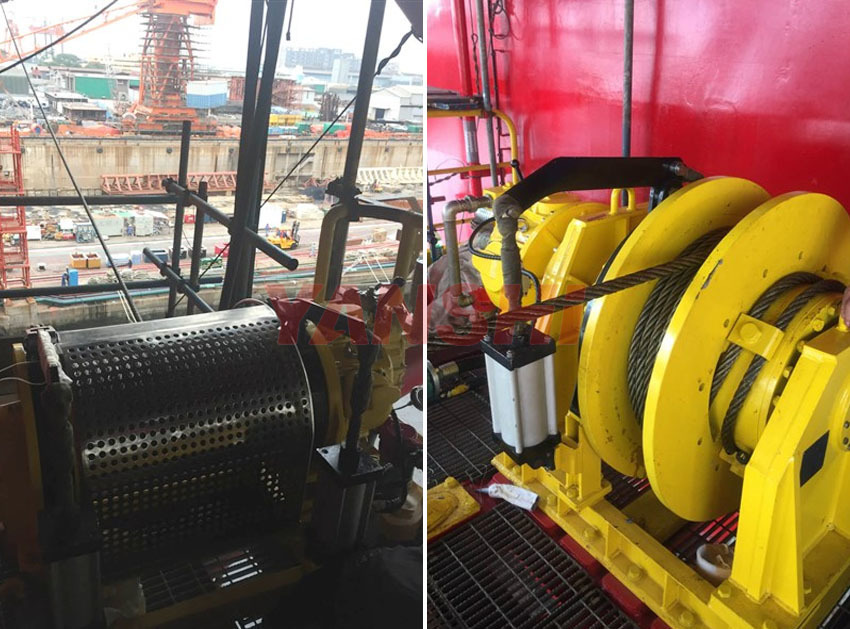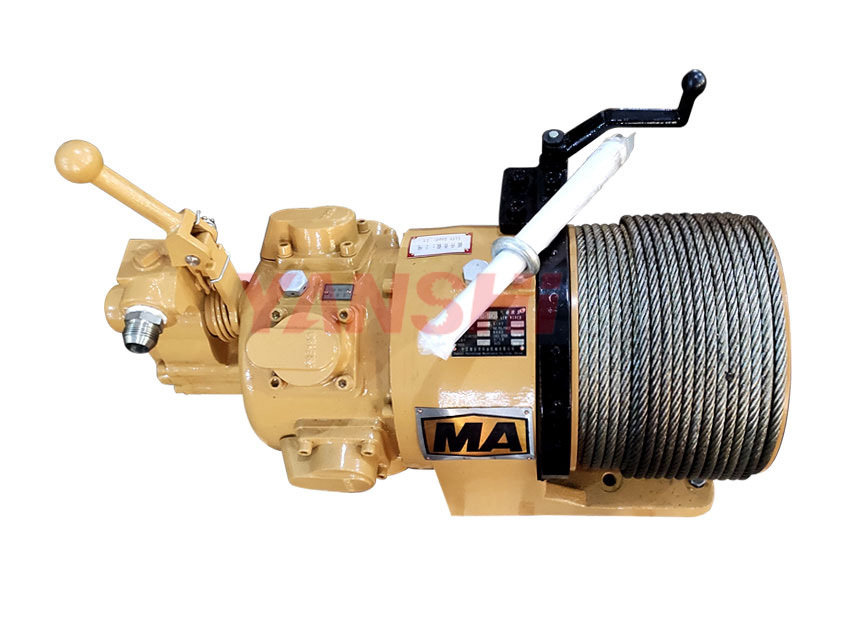

The pneumatic winch manufacturer talks about how to troubleshoot the hydraulic system faults of the hydraulic winch.
Release time:
2022-04-28
The hydraulic system is an important component of the hydraulic winch. Once the hydraulic system fails, if not repaired in time, it will affect the normal use of the winch. How to troubleshoot the winch hydraulic system? The editor from the pneumatic winch manufacturer will explain it to everyone.
Pneumatic WinchThe manufacturer talks about how to troubleshoot the hydraulic system of the hydraulic winch.

Pneumatic winch manufacturer: How to troubleshoot the hydraulic system of the hydraulic winch.
The hydraulic system is an important component of the hydraulic winch. Once the hydraulic system fails, if not repaired in time, it will affect the normal use of the winch. How to troubleshoot the hydraulic system of the winch? The editor from the pneumatic winch manufacturer will explain.
1. Drain the old oil, clean or replace the filter element and oil filter mesh of the hydraulic winch.
2. Clean the oil tank and ventilation openings, using cloth instead of cotton yarn for wiping.
3. Disassemble all major components of the motor on the hydraulic winch and clean all parts with diesel. If disassembly is not possible, use light lubricating oil or a mixture of oil and kerosene for cleaning.
4. Reassemble the cleaned parts, and tighten each bolt and screw to the specified torque during assembly.
5. Run the hydraulic system without load, cycling 3 to 4 times to release air.
Pneumatic winch manufacturer: We need to understand what faults are likely to occur in the hydraulic system and choose different methods for repair and troubleshooting based on different types of faults, so that the hydraulic winch can be used normally and its service life can be extended.
Pneumatic WinchManufacturer: Air supply method for the pneumatic motor of the hydraulic winch.
Pneumatic winch manufacturer: The hydraulic actuator is a device that everyone needs to learn to operate and use. By utilizing some of its features, we can achieve various functions. There will be a pneumatic motor inside the device that can supply air. Below, the editor from the pneumatic winch manufacturer will introduce the method in detail.
1. The air supplied to the pneumatic motor of the hydraulic lift is filtered and pressure-reduced. The directional control valve needs to supply air to the motor and rotate the motor when necessary. This valve can be pneumatically controlled, electronically controlled, or mechanically controlled.
2. In applications where bidirectional rotation is not required, controlling with a 2/2 or 3/2 valve is sufficient. For low-speed, high-torque pneumatic motors that can rotate in reverse, a 5/3 valve or two 3/2 valves are needed to ensure that the motor has a supply of compressed air and exhausts residual air.
3. If the pneumatic motor of the hydraulic actuator is not used for directional rotation, a flow control valve can be installed in the air supply line to adjust the speed of the motor. If the motor is used for reverse rotation, a flow control valve with internal one-way function needs to adjust the rotation in each direction. A valve with one-way function allows air to be discharged from the motor's residual air outlet to the control valve's outlet, and then exhausted.
4. The supply of compressed air should have sufficient pipes and valves to ensure the motor's high torque. At any time, the pneumatic motor requires a supply pressure of 6 bar. When the pressure drops to 5, the power will decrease.
In the hydraulic actuator, the pneumatic motor is very important, almost determining its Applications. In actual operation, we can complete the air supply function through the air supply method introduced by the editor.Pneumatic WinchThis is beneficial for the effective use of the equipment.
RELATED INFORMATION