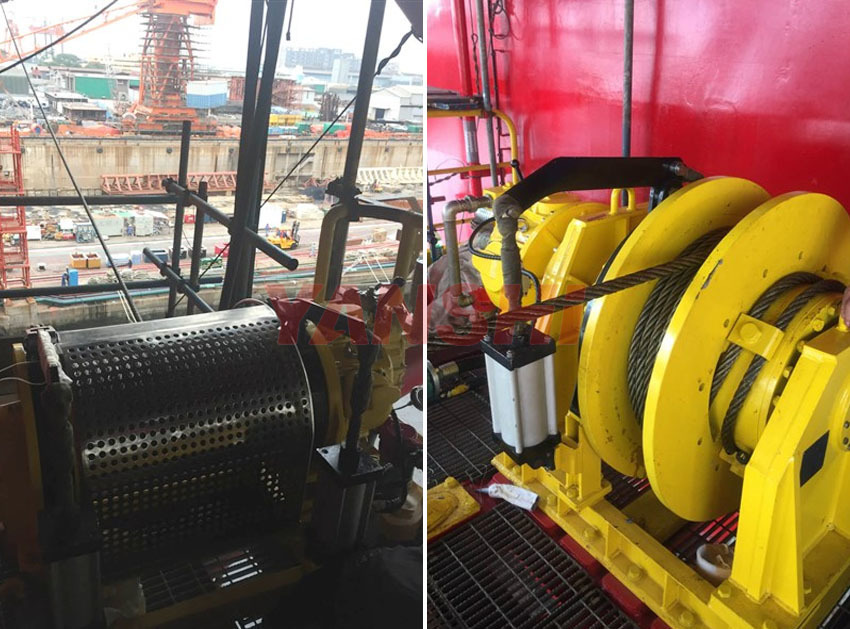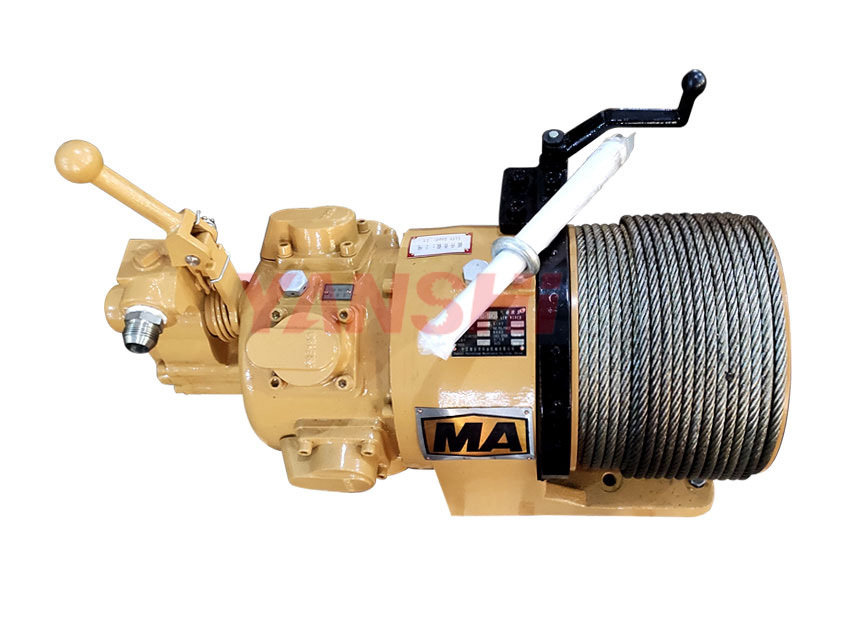

What is the structural form of the pneumatic winch?
Release time:
2022-03-29
The pneumatic winch is a lightweight lifting device that uses a reel to wind wire or chains to lift or pull heavy objects, also known as a winch. The winch can lift vertically or pull heavy objects horizontally or at an angle. Winches are divided into manual winches and electric winches, with electric winches being the main type now. They can be used alone or as components of machines for lifting, road construction, mining elevators, etc. They are easy to operate, have multiple ropes, and are convenient to move, making them widely applicable. They are mainly used for the lifting or leveling of materials in construction, water conservancy, engineering, forestry, mining, docks, and other areas.
Pneumatic WinchA lightweight lifting device that uses a reel to wind wire or chains to lift or pull heavy objects, also known as a winch. The winch can lift vertically or pull heavy objects horizontally or at an angle. Winches are divided into manual and electric types, with electric winches being the main type now. They can be used alone or as components of machines for lifting, road construction, mining elevators, etc. They are easy to operate, have multiple ropes, and are convenient to move, thus can be widely applied. Mainly used for the lifting or leveling of materials in construction, water conservancy, engineering, forestry, mining, docks, etc.

What is the structural form of a pneumatic winch?
The pneumatic winch converts electrical energy into mechanical energy through a motor, meaning the rotor of the motor rotates to output power, inducing the rotation of the roller through a tripod, shaft, and gear after reduction. The steel wire rope wound on the reel is lifted or lowered by the pulley block, converting mechanical energy into mechanical work to complete the vertical transportation and unloading of the load.
How to maintain a pneumatic winch?
The motor isPneumatic Winchan important component and also one of the more expensive parts of the pneumatic winch. If damaged, the cost of repair or replacement can be high. Therefore, customers are reminded to manage the motor of the pneumatic winch or winch well. The maintenance methods are as follows:
1. The operating environment should be kept dry, the surface of the motor should be kept clean, and the air intake should not be obstructed by dust, fibers, etc.
2. When the thermal protection of the motor continues to operate, it is necessary to determine whether the fault comes from the motor or overload, and whether the total value of the protection device is too low. The motor can only be started after the fault is eliminated.
3. During the operation of the pneumatic winch motor, good lubrication must be ensured. A regular motor runs for about 5000 hours, which requires replenishing or replacing the grease. If the bearing overheats or the lubrication deteriorates during operation, the hydraulic grease should be replaced in a timely manner. When replacing the grease, the old lubricant needs to be removed, and gasoline should be used to clean the bearings and the oil tank on the bearing cover, then fill the hollow space between the inner and outer rings of the bearing with ZL-3 lithium grease, 1/2 (2 poles) and 2/3 (4 poles, 6 poles, 8 poles).
4. After the bearing's lifespan ends, the vibration and noise of the motor will greatly increase, so when the radial clearance of the bearing reaches the following values, the bearing needs to be replaced.
5. When disassembling the pneumatic winch motor, the rotor can be removed from the axial stretch or the non-moving end. If it is not necessary to separate the fan, or if it is convenient to remove the rotor from the reserve stretch, then when pulling out the rotor, care must be taken to avoid damaging the stator winding or insulation.
6. When replacing the winding, the shape, size, number of windings, wire gauge, etc. of the original winding should be recorded. If this data is lost, the manufacturer should be asked to freely modify the original design rights. One or more performances in the motor may deteriorate, and it may even be unusable.
RELATED INFORMATION