
What are the characteristics and precautions of a pneumatic winch?
Release time:
2021-12-14
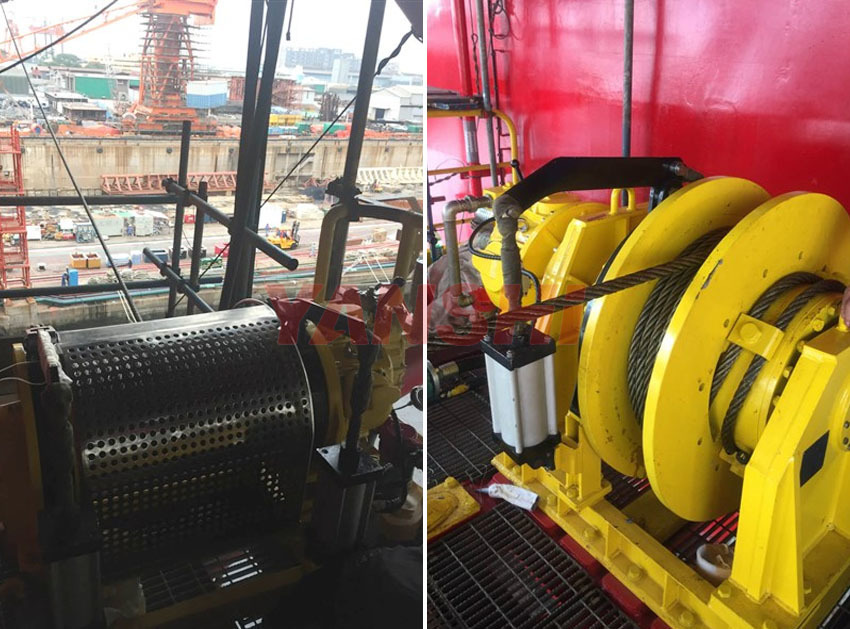
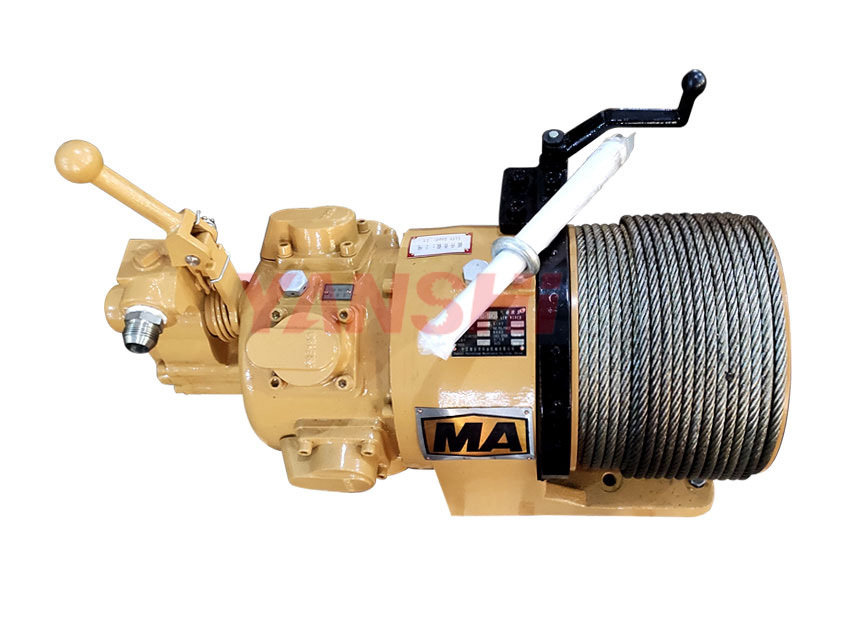
The pneumatic winch is powered by a vane-type pneumatic motor, and the power is transmitted to the drum through a planetary gear reducer to lift heavy objects. The pneumatic winch relies on compressed air as the power source, driving the motor, which rotates the drum through a two-stage gear reduction, thereby lifting various heavy objects.
Pneumatic WinchPowered by a vane-type pneumatic motor, the power is transmitted to the drum through a planetary gear reducer to lift heavy objects.
Pneumatic WinchRelying on compressed air as the power source, it drives the motor, which rotates the drum through a two-stage gear reduction to lift various heavy objects.
Pneumatic WinchPowered by a vane-type pneumatic motor, the power is transmitted to the drum through a planetary gear reducer to lift heavy objects. This winch is compact, lightweight, has a simple structure, is easy to operate and maintain, and can achieve stepless speed regulation within a certain range. It can be operated manually without compressed air.
Pneumatic WinchFeatures include:
(1) Compact size, lightweight, and strong mobility.
(2) Stepless speed regulation is achievable.
(3) Flexible forward and reverse operation.
(4) Strong explosion-proof capability, especially when working in flammable and explosive gas environments, demonstrating superior safety and reliability.
(5) Strong moisture resistance, can be safely used outdoors in rainy weather, which is unmatched by electric winches.
(6) High starting torque, can start under load, and has overload protection.
Pneumatic WinchPrecautions during use.
1. Start the pneumatic motor first, then the drive gear begins to operate. Before starting, apply the brake band on the brake drum, release the brake handle on the large gear so that the brake drum does not rotate, allowing only the large internal gear to rotate.
2. If you want to start the drum, you should first completely release the brake band on the drum, and then apply the brake band on the large internal gear. At this point, the drum rotates and winds the steel wire rope to work.
3. During the operation of the pneumatic winch, if you want to pause the operation of the pneumatic winch, you can first release the brake band on the internal gear, and then apply the brake band on the drum.
4. When starting the electric vehicle, do not apply both brakes at the same time, otherwise, the motor may easily burn out.
5.Pneumatic WinchThe temperature of the drum's brake band and bearings should not exceed 70°C. If the temperature rises sharply, stop immediately to check.
6. To prevent dust intrusion and lubricant overflow, the sealing device of the pneumatic winch should be intact.
7. To ensure safe operation, it is necessary to check whether the winch rope head is secure, whether the internal structure of the drive device is damaged or jammed, and whether the internal parts are excessively worn, etc. Only after confirming that everything is correct can you start the vehicle.
Pneumatic WinchOperation and Maintenance.
1. Do not disassemble the tool's parts arbitrarily before operating, as this not only affects the author's safety but also damages the tool.
2. If the tool has any slight malfunction or fails to achieve its original function after use, it should not be used again and should be checked immediately. Regularly check and maintain the tool (about once a week), add grease to rotating parts such as bearings, and add oil to the components of the pneumatic motor.
3. When using various tools, be sure to comply with various safety regulations and operating instructions.
4. Choose the appropriate working tools. Tools that are too large can easily cause injuries, while tools that are too small can easily cause tool damage.
5. The inlet pressure at the tool's inlet (not the outlet pressure of the air compressor) is generally 90 psig (6.2 kg/cm²); both too high or too low can damage the tool's performance and lifespan.
RELATED INFORMATION