
How to make a pneumatic hoist that is easy to maintain?
Release time:
2021-11-19
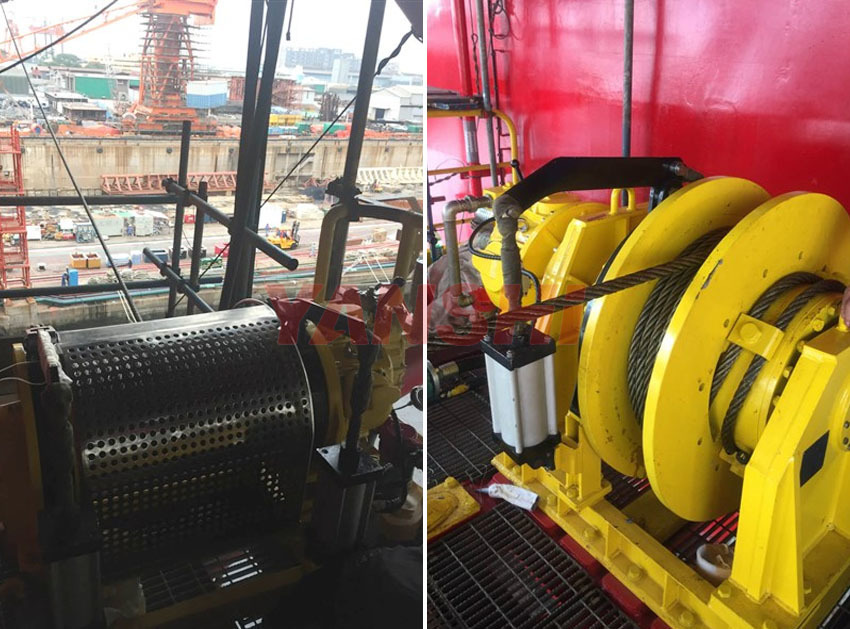
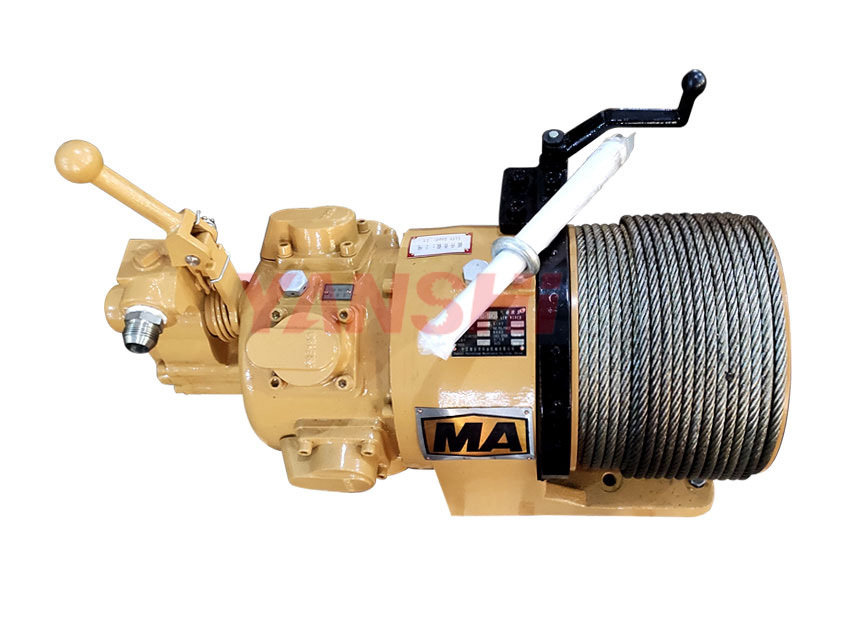
The winch uses a drum to wind steel wire rope or chains to lift or pull heavy objects, also known as a hoist. Cranes can lift vertically, pull horizontally, or incline to pull heavy objects. There are three types of winches: manual winches, pneumatic winches, and hydraulic winches. Currently, pneumatic winches are the main type. They can be used independently or as components of machinery for lifting, road construction, mining, etc., due to their simple operation, large rope winding capacity, and convenient displacement, making them widely used. They are mainly used for lifting or pulling materials in construction, water conservancy projects, forestry, mining, docks, and other areas.
The winch uses a drum to wind steel wire rope or chains to lift or pull heavy objects, also known as a hoist. Cranes can lift vertically, pull horizontally, or incline to move heavy objects. Winches are divided into three types: manual winches, pneumatic winches, and hydraulic winches. Currently, pneumatic winches are the main type. They can be used independently or as components of machinery for lifting, road construction, mining, etc., due to their simple operation, large rope winding capacity, and convenient displacement, making them widely used. They are mainly used for lifting or dragging materials in construction, water conservancy projects, forestry, mining, docks, and other areas.
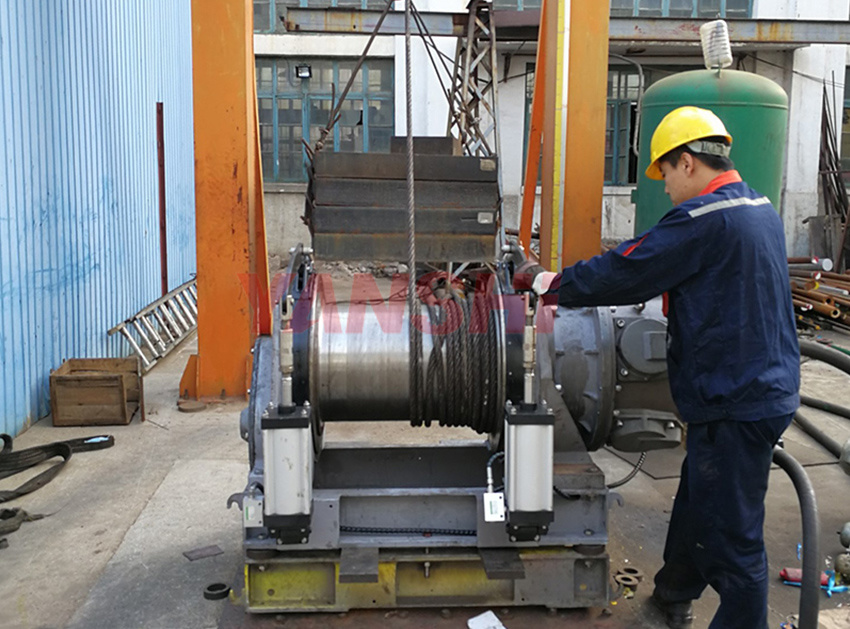
However, existing pneumatic winches still have drawbacks during use. Most have a simple structure, and the components are fixedly installed. Although this fixed installation method is compact, it becomes very troublesome when maintenance or replacement of a part of the winch is needed, especially when there is a problem with the drum, or when different lengths, thicknesses, and toughness of the pulling rope need to be replaced on the drum for different usage scenarios. The workload is very large and needs improvement.
Technicians provide a pneumatic winch that is easy to maintain to solve the problem mentioned in the background technology, where most existing pneumatic winches have a simple structure and fixed component installation. When there is a problem with the drum, or when different lengths, thicknesses, and toughness of the pulling rope need to be replaced on the drum for different usage scenarios, the workload is relatively large. To achieve the above objectives, this pneumatic winch adopts the following technical solution: a maintenance-friendly pneumatic winch, including a base, a winding roller, and a movable frame. One side of the base is equipped with a motor, which is connected to a gearbox. One side of the gearbox is equipped with a drive shaft, and one end of the drive shaft is connected to a driven wheel via a drive chain. The other side of the base is equipped with a winding roller, one end of which has a fixed frame, and the other end has a movable frame. One side of the winding roller is equipped with a pulling rope adjustment mechanism, and the bottom of the winding roller is equipped with a folding support. The top of the pulling rope adjustment mechanism has a crossbar, with side rods at both ends. The crossbar has a movable block, and the bottom of the movable block has a ring. One side of the movable frame has a support plate, and the bottom end of the support plate has a clamping seat. The top of the support plate has a bearing, and one side of the bearing has a fixed seat. The bottom of the clamping seat has a guide rail, and one side of the clamping seat has a positioning pin.
Compared with the existing technology, the above pneumatic winch has the following beneficial effects: 1. The pneumatic winch allows for easy disassembly of the roller, with both ends of the roller fixed by a fixed frame and a movable frame. When different lengths of rollers need to be replaced or repaired, the folding support can be fixed first, and by moving the position of the clamping seat on the movable frame along the guide rail, the roller can be easily disassembled, facilitating the maintenance of subsequent components; 2. After the repair or replacement of the pneumatic winch is completed, one end of the winding roller is inserted into the fixed seat of the fixed frame, the movable frame is moved to the appropriate position, and then the position of the clamping seat is fixed on the guide rail with a positioning pin; 3. One side of the winding roller of the pneumatic winch is equipped with a pulling rope adjustment mechanism, which drives the ring to move uniformly back and forth along the crossbar through the movable block, allowing the pulling rope to be threaded through the ring, ensuring that the pulling rope is wound evenly and orderly around the outside of the winding roller.
RELATED INFORMATION