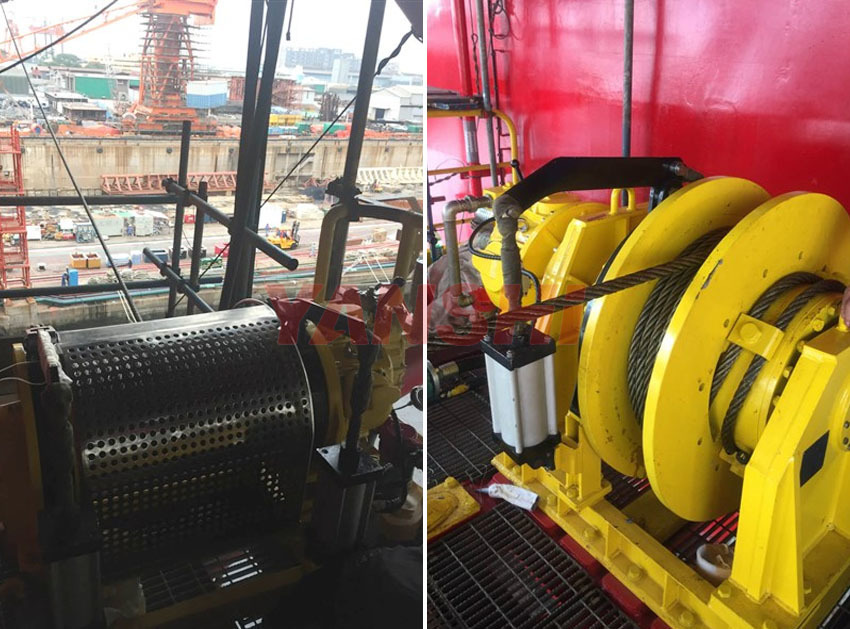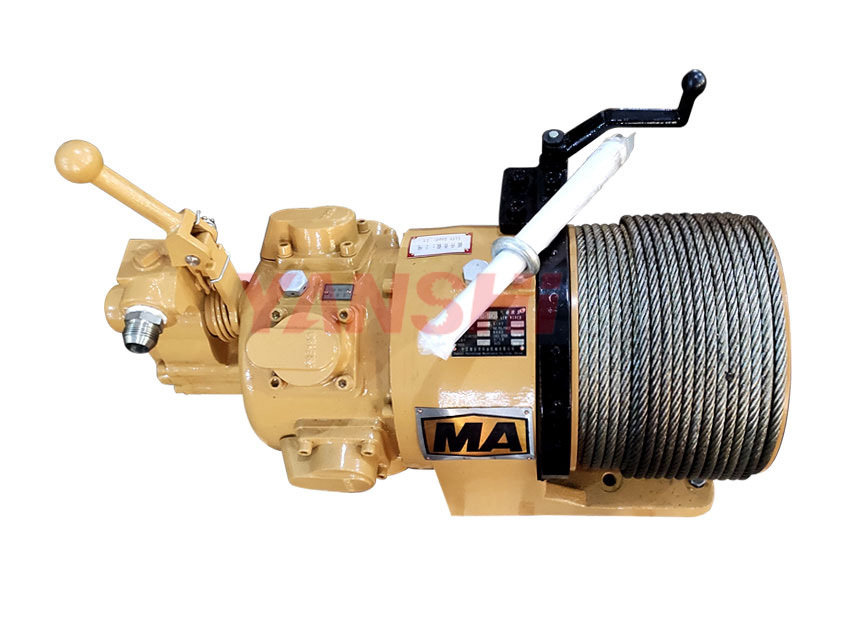

Types of pneumatic winches
Release time:
2021-11-12
Types of pneumatic winches: A winch is a device for self-protection and towing of off-road vehicles, used for vehicle self-rescue in harsh environments such as snow, swamps, deserts, beaches, and muddy mountain roads, as well as for clearing obstacles, towing objects, and installing facilities under other conditions.

Types of Pneumatic Winches
Pneumatic winches are devices for self-protection and towing of off-road vehicles, used for vehicle self-rescue in harsh environments such as snow, swamps, deserts, beaches, and muddy mountain roads, as well as for clearing obstacles, towing objects, and installing facilities under other conditions.
Types of Pneumatic Winches
1. Types of Winches
Common pneumatic winches can be categorized into four types based on their power source: mechanical winches, electric winches, hydraulic winches, and wheel winches, each with the following characteristics.
1) Mechanical winches use the output power from the power source and transfer case as their power source. The advantages are that they can continuously provide a large towing force, have a long usage time, do not have heating issues, and can provide multi-directional towing force (forward, backward, and even sideways), making them very suitable for military vehicles and serious high-performance off-roading; the disadvantages are that they require engine power, meaning they cannot be used if the engine is not operational due to water or other reasons; they also cannot be used if the transfer case loses the driving force in the winch direction.
2) Electric winches are powered by the vehicle's own electrical system. The advantage is that they can almost be used normally when the vehicle is turned off. This is a significant advantage, especially in areas with a lot of water, and they are easy to install, can be installed in multiple positions, and can be quickly relocated, making them commonly used winches for off-road vehicles. The disadvantage is that they cannot maintain long-term use (due to the limits of the vehicle's electrical system, easy heating, etc.), and most electric winches can only provide a small driving force, applying force in only one direction; if installed on the front, they can only pull forward, and if installed on the rear...
3) Hydraulic winches use the vehicle's power/power steering system as their power source, utilizing the power steering pump to provide the power source. The advantages are that they are easy to install, and their external fixed parts are generally interchangeable, allowing for replacement in the field. The driving force is between electric and mechanical winches, and the chance of overheating is relatively rare. The disadvantage is that, like mechanical winches, they require engine power. This means the engine must be kept running. Additionally, if the power steering system fails, it cannot be used, and in certain off-road situations, the power steering system is susceptible to external damage.
4) Wheel winches are powered by the power source and wheel axle. The principle is to use four of the six fixed bolts on most off-road vehicle wheels to secure the winch. The advantages are that this is a relatively new winch system, easy to install and remove, and is done in the same step as changing tires. It is lightweight, lighter than any other winch, and does not add fatal extra weight to the front suspension. It is inexpensive and can provide bidirectional pulling force. The disadvantage is that because the power point is the axle, its position is too low, making it unusable under certain conditions, and it also requires engine power.
RELATED INFORMATION