
Precautions for the use of pneumatic winches and maintenance operations
Release time:
2021-08-07
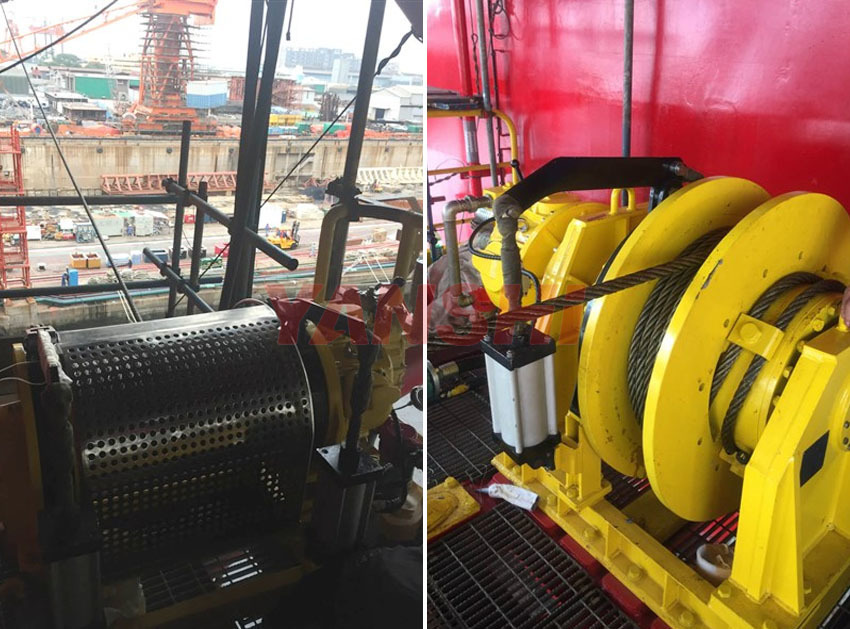
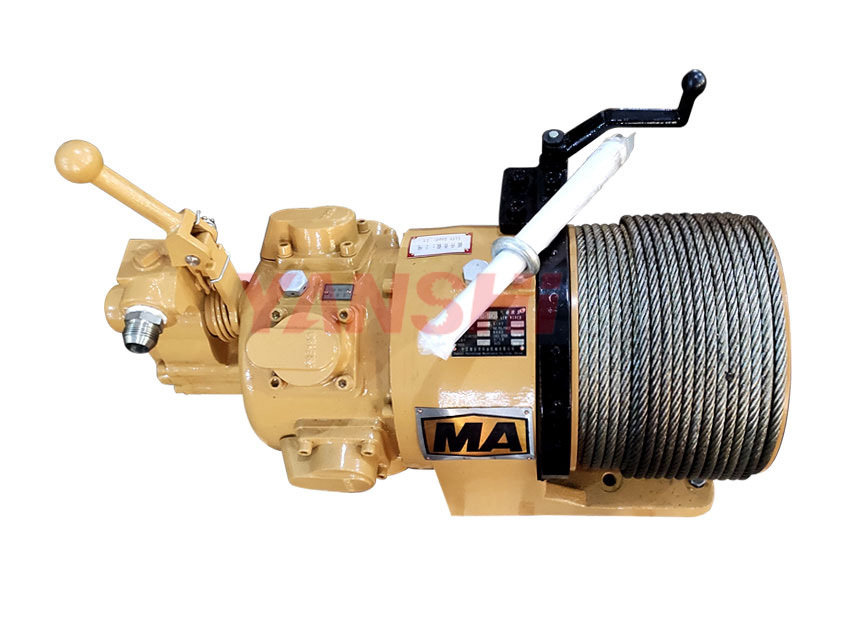
The pneumatic winch is powered by a vane-type pneumatic motor, which transmits power to the drum through a planetary gear reducer to lift heavy objects. The motor and reducer are connected on both sides of the drum, making the winch compact, lightweight, structurally simple, easy to operate, and convenient to maintain, allowing for stepless speed regulation within a certain range. The braking of the pneumatic winch is achieved by an electric brake. The braking is reliable. It can be operated manually without compressed air.
Pneumatic WinchPowered by a vane-type pneumatic motor, the power is transmitted to the drum through a planetary gear reducer to lift heavy objects. The motor and reducer are connected on both sides of the drum, making the winch compact, lightweight, easy to operate, and convenient for maintenance, allowing for stepless speed regulation within a certain range.Pneumatic WinchThe braking is achieved by an electric brake. The braking is reliable. It can be operated manually without compressed air.
Pneumatic WinchUsage Precautions
1. Start the pneumatic motor first, then the drive gear begins to operate. Before starting, the brake band on the winding wheel should be braked, and the brake lever on the large gear should be released so that the winding wheel does not rotate, only the large internal gear rotates.
2. If you want to start the winder, you should first completely release the brake band on the winder, and then brake the brake band on the large internal gear. At this time, the drum rotates, and the steel wire rope works.
3,Pneumatic WinchDuring operation, if you want to suspendPneumatic Winch, you can release the brake band on the large internal gear, and then the brake band on the brake drum.
4. When driving the electric vehicle, do not brake both brakes at the same time, otherwise it may easily cause the motor to burn out.
5. The drum brake band andPneumatic WinchThe temperature of the bearing should not exceed 70℃. If the temperature rises sharply, you should stop immediately to check.
Pneumatic WinchOperation and Maintenance
1. Do not disassemble the parts of the tool casually before operation, as it not only affects the safety of the operator but also may cause damage to the tool.
2. If the tool has minor faults or cannot achieve its original function after use, it should not be used anymore and should be checked immediately. Regularly (about once a week) check and maintain the tool, adding grease to rotating parts such as bearings, and oil to pneumatic motor components.
3. When using various tools, be sure to comply with various safety regulations and operating instructions.
4. Use appropriate tools for work. Tools that are too large may cause injuries, while tools that are too small may lead to tool damage.
5. The inlet pressure at the tool inlet (not the outlet pressure of the air compressor) is generally 90PSIG (6.2Kg/cm^2); too high or too low will damage the performance and lifespan of the tool.
Pneumatic WinchThe working principle: When the operating handle is moved to the start position, the valve of the distribution valve opens, and compressed air enters the valve core to make it rotate. At the same time, as the valve core rotates, compressed air is sequentially sent into five cylinders. As the compressed air expands, it pushes the piston, connecting rod, and crankshaft to rotate. When the piston is pushed to the "bottom dead center," the valve core will also turn to the exhaust position, and the expanded gas will automatically be discharged from the cylinder through the exhaust port of the valve body, while the remaining gas in the cylinder is discharged from the gas valve core and the exhaust port of the distribution valve. After the reciprocating cycle, the crankshaft continues to rotate, driving the drive shaft, which drives the drum to rotate, lifting heavy objects.
RELATED INFORMATION