
Basic characteristics of pneumatic motors
Release time:
2021-06-22
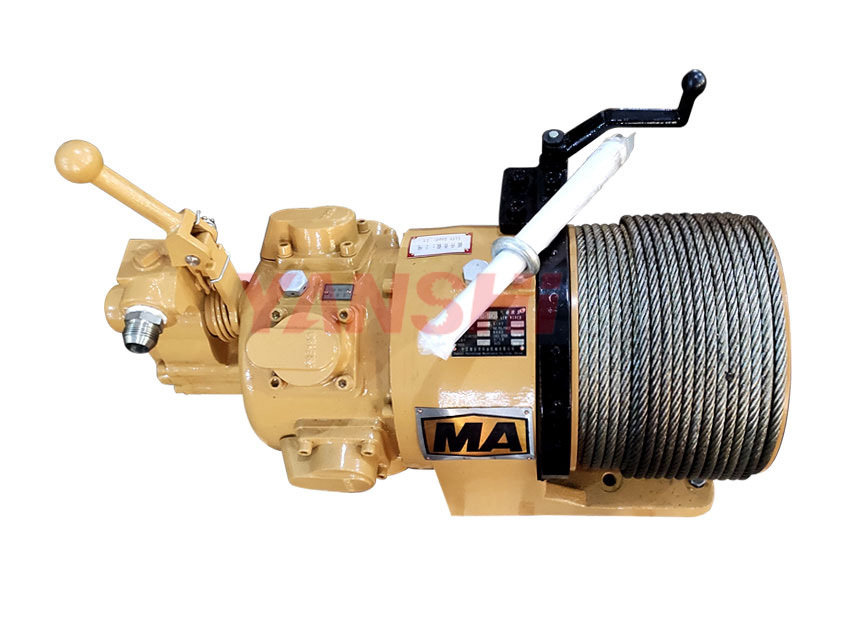
Pneumatic motors, also known as air motors, are devices that convert the pressure energy of compressed air into rotational mechanical energy. They are generally used as a rotational power source for more complex devices or machines. Pneumatic motors are classified by structure into: vane pneumatic motors, piston pneumatic motors, compact vane pneumatic motors, and compact piston pneumatic motors.
Pneumatic motorAlso known as air motor, it refers to a device that converts the pressure energy of compressed air into rotational mechanical energy. Generally used as a rotating power source for more complex devices or machines.Pneumatic motorClassified by structure as: vane typePneumatic motor, piston typePneumatic motor, compact vane typePneumatic motor, compact piston typePneumatic motor.
Basic characteristics
Pneumatic motorIt is a prime mover that uses compressed air as the working medium, which is a power device that converts pressure energy into mechanical energy by utilizing the expansion of compressed gas.
Various typesPneumatic motorAlthough the structures are different and the working principles vary, mostPneumatic motorhave the following characteristics:
1. Stepless speed regulation. By controlling the opening of the intake or exhaust valve, that is, controlling the flow of compressed air, the output power and speed of the motor can be adjusted, achieving the purpose of regulating speed and power.
2. Can rotate forward and backward. MostPneumatic motorcan achievePneumatic motorthe forward and reverse rotation of the output shaft simply by using a control valve to change the direction of intake and exhaust, and can instantaneously reverse direction. The impact during forward and reverse conversion is very small. One of the main advantages of the air motor's reversing operation is its ability to reach full speed almost instantaneously. Vane-type air motors can reach full speed in one and a half seconds; piston-type air motors can reach full speed in less than one second. By using a control valve to change the intake direction, forward and reverse rotation can be achieved. The time to achieve forward and reverse rotation is short, the speed is fast, the impact is small, and there is no need to unload.
3. Safe operation, unaffected by vibration, high temperature, electromagnetic interference, radiation, etc., suitable for harsh working environments, and can operate normally under adverse conditions such as flammable, explosive, high temperature, vibration, humidity, and dust.
4. Has overload protection, will not fail due to overload. During overload, the motor only reduces speed or stops, and when the overload is removed, it can immediately return to normal operation without causing damage to components. It can operate continuously at full load for a long time with minimal temperature rise.
5. Has a high starting torque and can start under load. Starting and stopping are quick. Can start with a load. Starting and stopping are rapid.
6. Wide power range and speed range. Power ranges from a few hundred watts to tens of thousands of watts; speed can range from zero to tens of thousands of revolutions per minute.
7. Easy to operate, maintenance and repair are relatively easy. Air motors have a simple structure, small size, light weight, high power, easy operation, and convenient maintenance.
8. Uses air as the medium, with no supply difficulties, and used air does not need treatment, posing no danger when released into the atmosphere. Compressed air can be supplied centrally and transported over long distances.
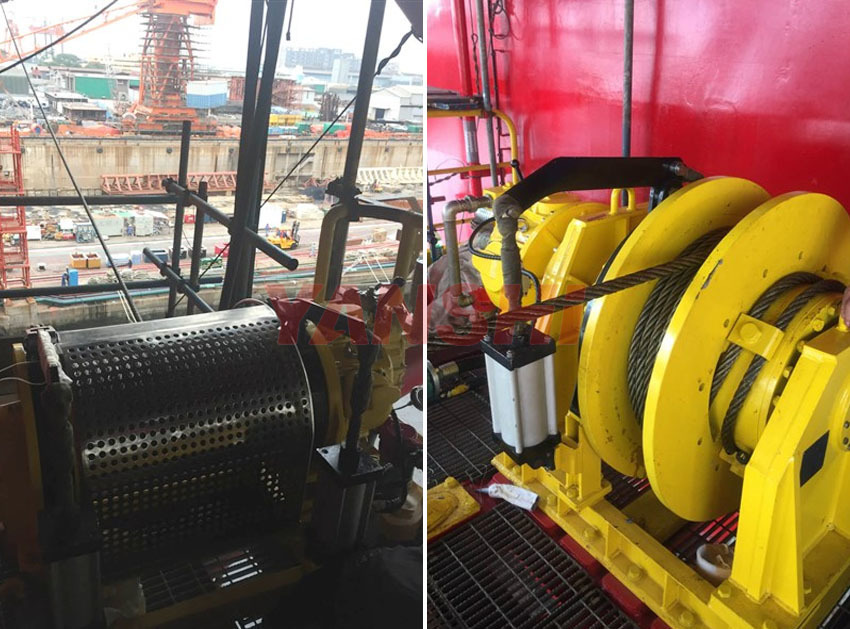
Due toPneumatic motorhaving many of the above characteristics, it can work in harsh environments such as humidity, high temperature, and high dust. In addition to being used as power in drilling, mining, and loading equipment in mining machinery, it is also widely used in industries such as shipping, metallurgy, chemical engineering, and papermaking.
Characteristics include:
1) Variable speed, variable speed;
2) Explosion-proof - no sparks; does not generate static electricity
3) Operates without heating;
4) Will not burn out;
5) Can rotate in both directions.
RELATED INFORMATION