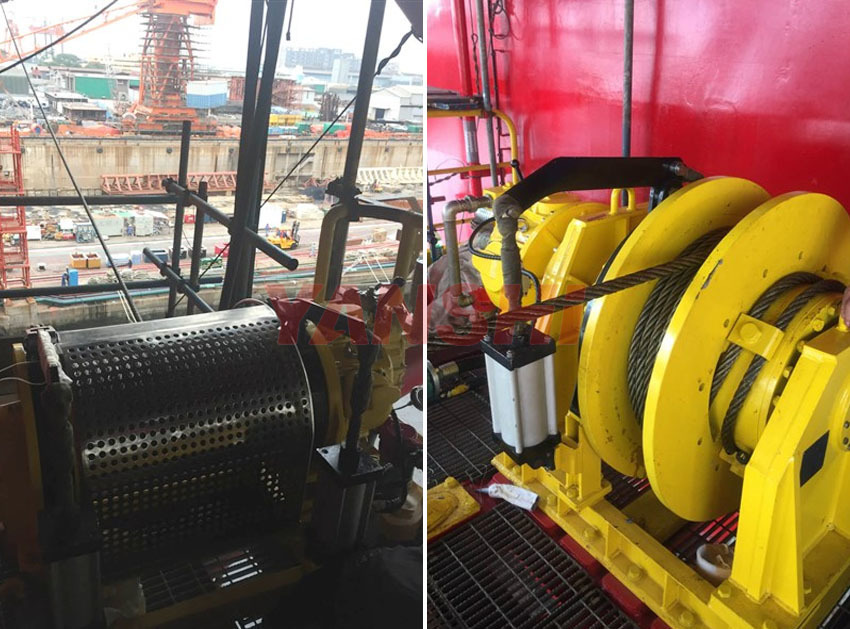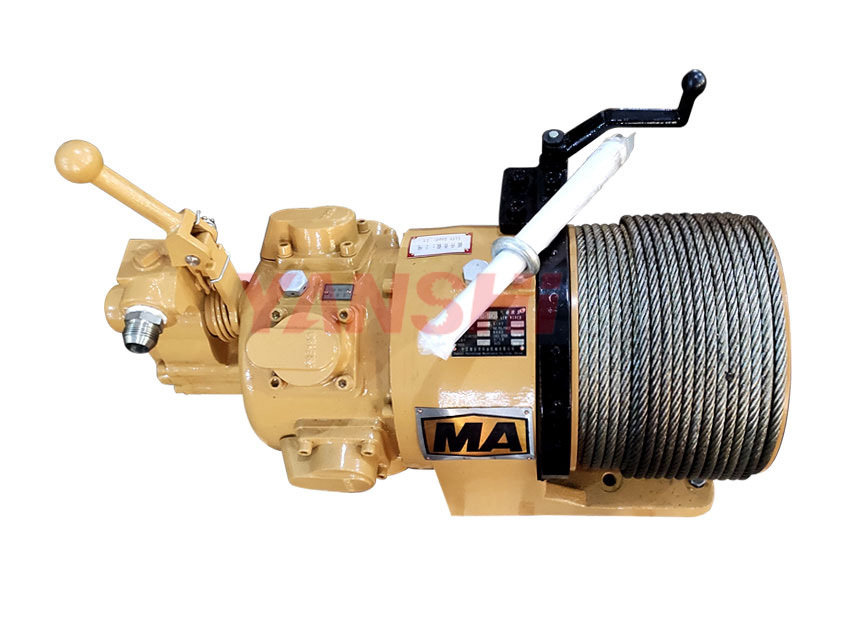

How is a pneumatic motor controlled?
Release time:
2021-01-11
How is a pneumatic motor controlled? 1. Filter and reduce the pressure of the air supplied to the motor. The directional control valve needs to provide air to the motor and rotate the motor when necessary. This valve can be pneumatically controlled, electrically controlled, or mechanically controlled.
Pneumatic motorHow it is controlled
1. Filter and reduce the pressure of the air supplied to the motor; the directional control valve needs to provide air to the motor and rotate the motor when needed. This valve can be pneumatically controlled, electrically controlled, or mechanically controlled.
2. When the motor is used in applications without bi-directional rotation, a 22 or 32 valve control is sufficient. A motor that requires reverse rotation needs a 53 or two 32 valves to ensure that the motor has a supply of compressed air and residual air discharge.
3. IfPneumatic motorthe motor is not used for directional rotation, a flow control valve can be installed in the air supply line to adjust the motor's speed. If the motor is used for reverse rotation, a flow control valve with an internal one-way function needs to be adjusted for rotation in each direction. Valves with an internal one-way function allow air to flow from the motor's exhaust outlet to the control valve's outlet and then discharge.
4. The supply of compressed air has sufficiently large pipes and valves to ensure the motor's torque. At any time, the motor requires a supply pressure of 6 bar. When the pressure drops to 5 bar, the power will decrease. Typically, the method to reduce the speed of the air start motor is to install a flow control valve at the intake. When using an air start motor, the intake can also be used as an exhaust outlet. Flow regulation is also used for the main exhaust outlet, allowing speed control in both directions.
Pneumatic motorPressure regulation
Speed and torque can also be adjusted by installing a pressure reducing valve at the upstream air supply. When low-pressure air is continuously supplied to the pneumatic motor and the motor slows down, very low torque will be generated on the output shaft. An auxiliary throttle generates low speed in one direction but maintains torque during deceleration. The main intake throttle can achieve deceleration in both directions, but pressure regulation of the main intake can be maintained during the deceleration process. WhenPneumatic motordecelerating, torque decreases, and speed also decreases.
RELATED INFORMATION